About ADU Services Remodeling Projects Blog Areas Contact Schedule Consultation
Blog

REMODELING AN OLDER BAY AREA HOME: WHAT TO EXPECT

July 2026 · 9 min read · Home Remodeling

Here's the thing about a house built before most of us were born. From the curb it looks finished. The walls are closed, the paint's fresh, the floors are down. And every one of those surfaces is hiding the actual age of the place. You don't find out what you bought until somebody opens it up.

That's not a scare line. It's arithmetic. Over half the homes in this region are more than 50 years old, which means most renovation projects here aren't starting on a blank slate. They're starting on top of decades of wiring, plumbing, framing, and soil that nobody's looked at since the original crew packed up. A clean-looking 1962 ranch in Mountain View has a story behind the drywall, and the story usually costs money.

So let me walk you through what we actually look for before we put a number on a project like that. Because the conditions hiding in a vintage Bay Area house aren't a mystery to us. They're a checklist. And the whole point of the walk-through, before you sign anything, is to name them while you still have choices.

Schedule Assessment
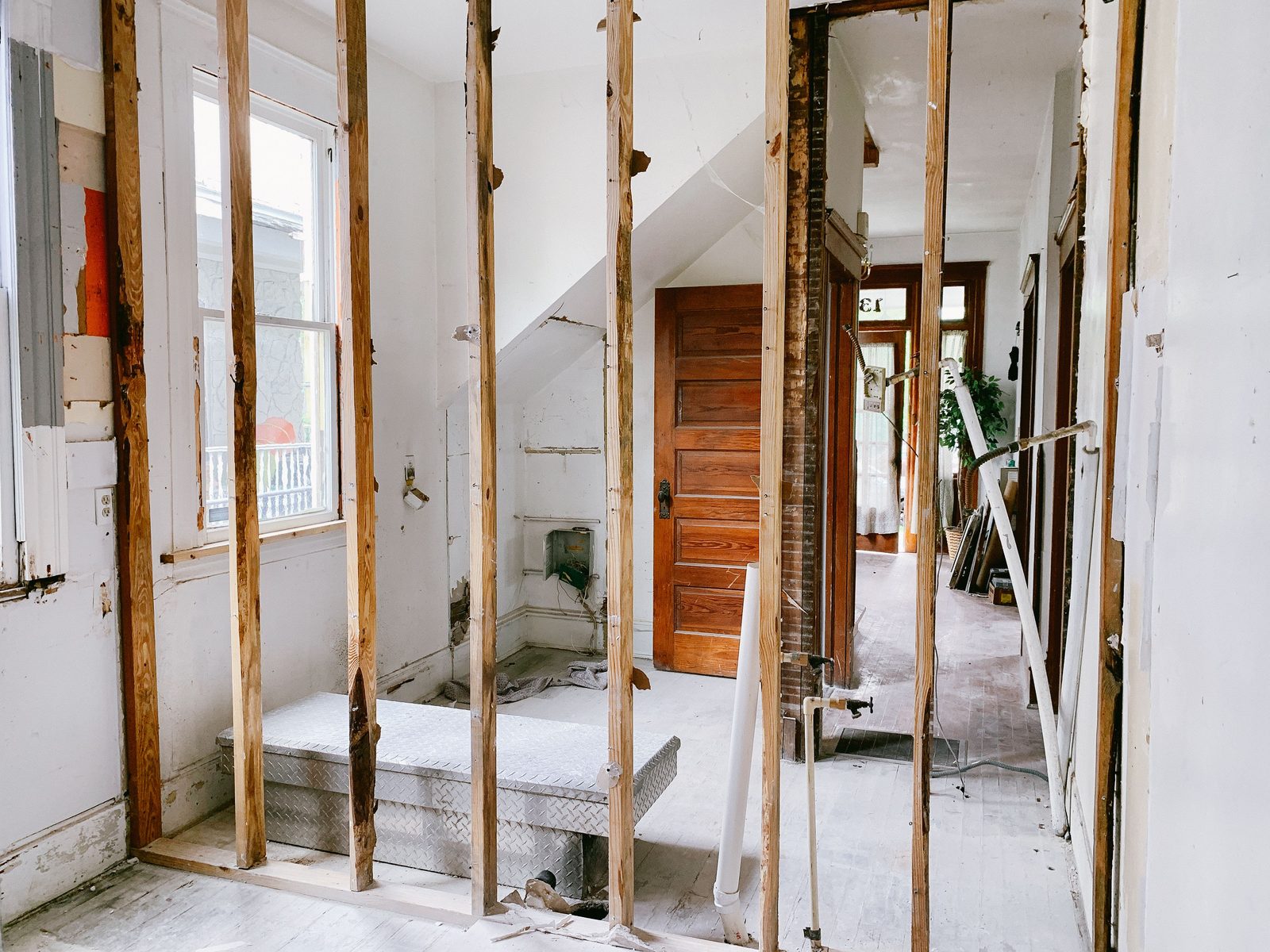
Interior of an older Bay Area home opened to the studs during a full remodel
01 The Numbers

WHY VINTAGE BAY AREA HOUSES HIDE SO MUCH

Start with the number, because it explains everything that follows.

Over 50% of the San Francisco Bay Area's housing stock is more than 50 years old, per Census and Harvard Joint Center for Housing Studies data. Nationally, the median age of an owner-occupied home climbed from 31 years in 2006 to 41 years by 2023, and our region runs older than that. So when we talk about renovating an aging home here, we're talking about the normal case, not the unlucky one.

What makes that matter is what those decades do to a house. Materials that were code in 1965 aren't code now. Pipe corrodes from the inside where you can't see it. Wiring insulation dries out. A foundation fine on flat ground does something different after 50 winters on expansive Bay Area clay. None of this is exotic. The surprises aren't hypothetical here. They're statistical.

That's also why the standard 5% contingency a lot of contractors pencil in doesn't hold here. On an older home, a 15% to 20% allowance is closer to the practical norm, because the odds of opening a wall and finding work behind it are high enough that pretending otherwise is its own kind of dishonesty.

THE AGE FACTOR
Bay Area homes 50+ yrsOver half
Median home age 200631 years
Median home age 202341 years
Typical contingency5%
Older-home contingency15% to 20%
02 Behind the Walls

THE CONDITIONS WE EXPECT TO FIND BEHIND THE WALLS

When we walk an older home, we're not guessing. We're reading the age of the house and naming the usual suspects out loud, so you hear them before the contract, not during demo. Here's most of the list.

Dated Electrical: Knob-and-Tube and Panels at Capacity. Two electrical conditions show up over and over in older Bay Area homes.

The first is knob-and-tube wiring, the original system in a lot of pre-war and mid-century houses. It's not automatically dangerous if it was left alone, but it has no ground, insurers increasingly won't touch it, and the moment you open a wall near it for a remodel, inspectors often want it gone. That turns a cosmetic job into a rewiring job.

The second is the panel. Plenty of homes from the 1960s and 70s run a 100-amp service where 200 amps is the modern standard, and that panel was frequently at capacity before anyone thought about adding a kitchen island, a heat pump, or an EV charger. Relocate an appliance or add a circuit and you can trip straight into a service upgrade you didn't plan for. We see this constantly: a kitchen remodel that turns into kitchen plus electrical because the panel had nothing left to give.

Aging Plumbing: Galvanized Supply and Cast-Iron Drains. Plumbing in a vintage house ages where you can't watch it.

Galvanized steel supply lines corrode from the inside. The pipe looks fine from the outside right up until water pressure drops or a joint lets go inside a wall. Cast-iron drain lines have a long life, but "long" isn't "forever," and a 60-year-old drain that's outlived its useful run is a real possibility, not a worst case. Open one wall for a bathroom and you can find both. That's how a tile job turns into a partial re-pipe.

Water Damage and Dry Rot Behind Finishes. This one hides better than any of the others.

Tile in an older bathroom is often the only thing holding back a slow water problem. Grout and caulk fail over 20 or 30 years, water migrates behind the tile plane into the framing and the subfloor, and nothing shows on the surface until you pull it. A cosmetic tile replacement becomes a subfloor replacement, and sometimes framing repair. The homeowners who aren't blindsided by that aren't lucky. They were told about it during assessment, so they were prepared.

Foundation, Soil, and Seismic Reality. Then there's everything below and behind the structure.

Bay Area lots come with their own complications: expansive clay soil that swells and shrinks with the seasons, sloped yards, mature tree roots, drainage that was never really engineered. A foundation that's served fine for decades can still need attention once you start adding load or opening walls. And in earthquake country, a remodel is often the moment to handle seismic conditions a mid-century house was never built for, like a cripple wall that was never braced or a structure never bolted to its foundation. None of that is a reason not to renovate. It's a reason to know the ground you're standing on before you commit.

Asbestos, Lead, and the Stuff Code Forgot. Last, the materials that were ordinary then and regulated now. Homes from this era can carry asbestos in old flooring, popcorn ceilings, and pipe wrap, and lead in original paint. Disturbing them during demo triggers handling requirements that cost time and money. It's the kind of thing you want named in the plan, not discovered with a saw in your hand.
USUAL SUSPECTS
WiringKnob-and-tube, no ground
Service panel100-amp, at capacity
Supply linesGalvanized, corroding
DrainsCast iron, spent
Behind tileDry rot, subfloor
FoundationClay soil, seismic
Old materialsAsbestos, lead paint
03 The Walk-Through

HOW THE WALK-THROUGH PLANS FOR ALL OF IT

Here's where a renovation on an aging house lives or dies. Not in the build. In the conversation before the contract.

A lot of contractors quote an older home the same way they'd quote new construction: off a phone call and a category. "Bathroom remodel, three-bed ranch, San Mateo." That gets you a clean number built on a clean drawing, and a clean number on a 60-year-old house is a number that's going to move. The low bid wins the job. The change orders show up later, once you're committed and it's hard to walk away.

We run it the other way around. Before we put a price on anything, we walk the property with you and name what the age of the house tells us is likely back there. The panel that's probably maxed. The galvanized supply that's probably corroding. The slow leak the bathroom tile is probably hiding. The soil and foundation questions a sloped Peninsula lot raises. You hear all of it up front, while you still have every option open: fund it now, leave it out, phase the work, or rethink the scope entirely.

Then the deal we strike is honest about the line between us. Anything we flag in that walk-through and you choose not to budget for is on you, and you knew about it going in. Anything we should have caught and didn't is on us. The contracted price doesn't drift because we hid the age of the house to win the bid. It holds.

The honest assessment is a feature, not bad news. A homeowner who learns the real scope during the walk-through can decide. A homeowner who learns it after demo, when the decisions are already irreversible, has almost no options left.

And you don't have to take our word for what's happening as the project runs. Every job runs on a shared platform where you watch the books in real time, every subcontractor bid, every line item, every change order, the day it happens. On an older home, where the surprises are statistical, that visibility is the difference between a partner and a guessing game. Our residential remodeling overview lays out how we sequence the work and where that open book fits.

WHO OWNS WHAT
Flagged, you skip itOn you
We missed itOn us
Contracted priceHolds
The booksReal time
You canFund, skip, phase
04 Permits

A WORD ON PERMITS FOR OLDER HOMES

Renovating an aging house often pulls in more of the permit process than people expect. Touch the electrical, the plumbing, or the structure and you're usually into permitted, inspected work, which is the right outcome on a home this old anyway. The catch is that each Bay Area jurisdiction runs its own zoning, plan check, and inspection pacing, so timelines vary. As a general range, permitting in our area often runs a few months rather than a few weeks, and we'd rather tell you that honestly up front than promise a date we can't control. The California Contractors State License Board's guidance on hiring a contractor makes the same point: get the scope, the permits, and the payment terms in writing before work starts. We handle the submittals and inspection sequencing as part of the job, and our design-build process walks through where permits land in the timeline.

05 The Checklist

WHAT TO DO BEFORE YOU RENOVATE AN AGING HOME

If you're staring at a vintage house and a remodeling wish list, run through this before you sign anything:

1. Did the contractor actually walk the property, or quote off a phone call and a photo?

2. Did they name the age-specific conditions, the wiring, the plumbing, the foundation, or did the bid assume clean demo?

3. Does the budget carry a realistic contingency for a home this old, closer to 15% to 20% than 5%?

4. Is the scope written so you can see which discoveries are funded, which are flagged but excluded, and who owns the rest?

5. After you sign, can you actually watch the budget and change orders, or do you have to call and hope?

A proposal that clears all five is worth more than the lowest number on the table, because the lowest number on an old house is almost never the price you'll actually pay. If financing is part of the picture, our financing options page lays out how homeowners spread a project like this without an upfront barrier.

THE FIVE-POINT CHECK
01 Walk the propertyNot a phone call
02 Age conditionsNamed, not assumed
03 Contingency15% to 20%
04 ScopeWho owns what
05 Open booksAfter you sign
Ready to See What Your House Is Actually Hiding?

PRICE IT HONESTLY SO THE NUMBER YOU SIGN IS THE NUMBER THAT HOLDS

An older Bay Area home is worth renovating. People do it every day, and they end up with exactly the house they wanted. The ones who come through it without the mid-project gut-punch are the ones who got the conditions named before they signed, not after the wall came open.

That's the whole job of the walk-through. We come out, read the age of the house, tell you straight what we expect to find, and price it honestly so the number you sign is the number that holds.

Let's walk your property before anybody talks price. No deposit to start the conversation.

See Our Design-Build Process Schedule an Assessment

For residential remodeling, kitchen and bathroom renovation, and ADU construction across the Bay Area, visit https://mendezandsonsinc.com.

Mendez & Son's Construction

39647 Iolani Ct.

Fremont, CA 94538

(408) 849-7340

Read more reviews and project details for our Bay Area remodeling contractor team on Nextdoor.