A new vanity is one thing. Moving the plumbing behind it is another thing entirely. And the gap between those two jobs, in dollars and in weeks, is bigger than almost anyone expects when they start planning.
That's the part that trips people up. You picture a weekend's worth of fresh tile and a nicer faucet, and somewhere in the middle of it you're staring at an open wall, a rotted subfloor, and a number that doesn't look anything like the one you had in your head. Nobody set out to do a gut renovation. It just turned into one.
Here's the thing, though. That turn almost never happens during the job. It happens before it, in the walk-through, if anybody bothers to do one. The line between a cosmetic refresh and a full bathroom renovation is exactly what a real site visit surfaces before a number gets signed. So let's walk it.
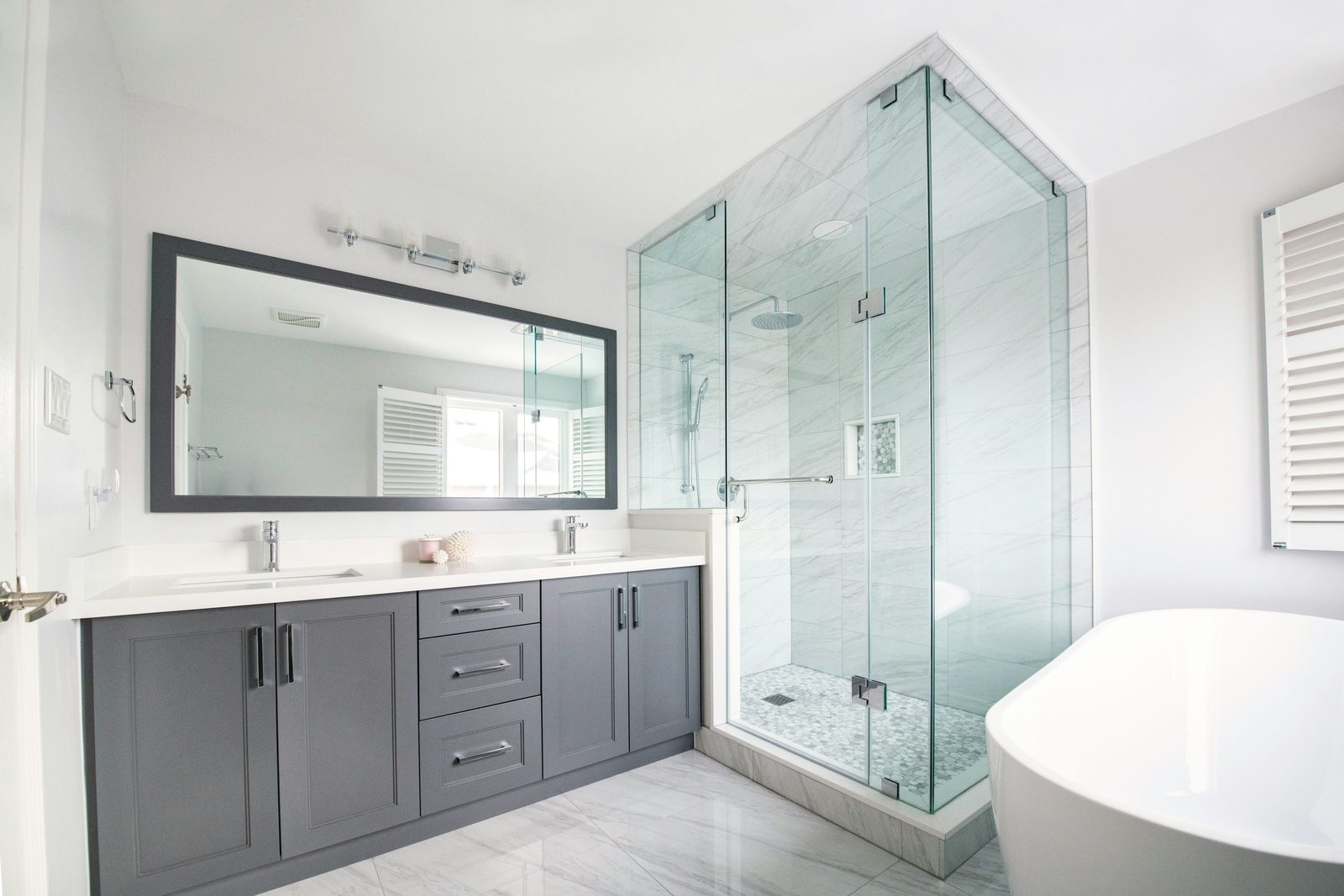
A true refresh leaves the bones alone. Same footprint, same plumbing locations, same vent stack, same supply lines. You're swapping finishes: vanity, mirror, fixtures, paint, maybe re-tiling the same surfaces in the same spots. The water comes and goes exactly where it always did. That's the kind of project that stays small, stays fast, and usually stays out of the permit office.
The trouble is that a bathroom is the one room where the cosmetic layer and the structural layer sit a quarter inch apart. Pull the old tile and you're not looking at a wall anymore. You're looking at whatever the last fifty years of water did to the framing behind it. That's the moment a refresh decides whether it's going to stay a refresh.
The honest version of this conversation happens up front. Before we put a number on a bathroom, we walk it with you and name what we can see coming, the tile condition, the floor around the toilet flange, the age of the supply lines, whether the fan actually vents anywhere. You decide what to budget for. The bid you sign already accounts for the likely surprises, so they don't show up later as a change order you didn't agree to.
"There were no surprises along the way from selecting materials, signing contracts, payment, work. It was clear and transparent."
That's a real Bay Area homeowner describing what the process is supposed to feel like. If the scope is going to grow, you want to know that at the kitchen table, not at demo.
If there's one decision that turns a refresh into a renovation without anyone announcing it, it's moving the plumbing.
Wanting the toilet on a different wall, relocating the shower, putting a double vanity where a single one used to be. None of that is unreasonable, and a lot of it makes a small bathroom finally work. But the moment water has to come and go from a new location, you're into the floor and into the walls. New drain runs. New supply. Sometimes re-routing a vent so the new fixture actually drains right. On a slab foundation, relocating a drain can mean cutting concrete. On a raised foundation, it means working under the floor.
That's a different job than a new faucet, and it usually comes with a permit. Most bathroom work that touches drain, waste, vent, or supply lines falls under permit in Bay Area cities, though it depends on your scope and your municipality. Permit timelines vary, but a typical cycle for this kind of work in our area runs a few weeks to a couple of months, worth planning around before you commit to a layout.
None of this means don't move the plumbing. Sometimes moving it is the whole reason for the remodel. It means the plumbing decision is the scope decision, and it belongs in the contract on day one, priced honestly, not discovered in week three. A contractor who quotes a layout change without flagging the drain work underneath it is handing you a number that's going to move.
Tile in an older bathroom is often the only thing holding back a water problem. Grout and caulk fail over twenty to thirty years; water migrates behind the tile plane and into the framing and the subfloor. By the time it's visible at the surface, it's usually been working back there a while.
We've seen this exact thing on Bay Area homes from the 1960s. The homeowner wants to swap dated tile for something current. Looks cosmetic. Then the tile comes off and there's years of slow infiltration in the wall, soft subfloor under the shower pan, sometimes framing that has to be sistered or replaced. A cosmetic tile job becomes a subfloor job, and occasionally a framing job. Not because anybody did anything wrong. Because that's what was already there.
Here's why that matters for the number you sign. Over half the homes in this region are more than fifty years old, per Census and Joint Center for Housing Studies data. On a home that age, hidden water damage behind bathroom tile isn't an exotic outcome; it's a common one. So a bid that prices a clean tile swap on a sixty-year-old bathroom, with no contingency for what's behind the wall, isn't optimistic. It's incomplete, and the missing money shows up later as a surprise.
The fix is assessment before commitment. We can't always know the exact condition behind the tile until demo, but we can see the warning signs at the walk-through, name them, and put a rough contingency in the contract for the likely repair. You go in knowing the range. If the wall opens clean, you spend less. If it doesn't, the number was already on the table. This is the same discipline we run on kitchen projects, where what's behind the cabinets tells the same kind of story.
Plumbing and water damage are the big two. But a few smaller items have a habit of pushing a refresh over the line into a renovation, and they rarely make it into a quick phone quote:
Ventilation. A lot of older bathrooms have a fan that vents into the attic, or nowhere at all. Bring the bathroom up to current expectations and you're often running new venting to the exterior. Small line item, real line item.
Subfloor and the toilet flange. The floor around a toilet is where slow leaks live. If it's soft, new tile over it is a waste; the subfloor comes first.
Old supply lines. Galvanized supply on a mid-century home is past its useful life. Once a wall is open, that's the moment to deal with it, not five years from now behind brand-new tile.
Electrical. Modern code expects GFCI protection and often more circuits than a 1960s bathroom was built with. Touch the walls and that conversation tends to come up.
Waterproofing. A proper shower pan and waterproofing membrane behind the tile is the difference between a remodel that lasts and one that's leaking again in a few years. It's invisible when it's done right, which is exactly why a cut-rate bid skips it.
Each of these on its own is small. Stacked up, they're the difference between the refresh you imagined and the renovation you actually have. The point isn't to scare you off. All of them are knowable at the walk-through, before you sign, instead of billable surprises after.
Here's where this all comes together. The reason scope matters so much on a bathroom is that scope is what moves the price. And the price only stays put if the scope was honest from the start.
Once we contract a bathroom with you, the price is the price. The only way that number moves is a scope addition you authorize in writing, or a risk we flagged at the walk-through that you chose not to fund. That's it. No mid-project surprise upcharge, because the surprises were named before signing, not sprung after. That's the whole reason we walk the property first and price what's likely behind the wall. The walk-through is what makes the held price believable.
A contractor who skips the walk-through and hands you a low number for a clean tile swap isn't giving you a better deal. He's giving you a number built to grow the first time the wall comes open. The bid that accounts for the bathroom's real scope costs more on paper and less in reality, because it's the one that doesn't change on you in week three.
And you watch all of it happen. Every project we run lives on a shared platform where you see the budget, the line items, the change orders, and the schedule in real time, the day they update. If a flagged risk turns into real work, you see the line, you see the number, you approved the contingency going in. Nothing about the price is a mystery you find out about after the fact.
If you're staring at a bathroom proposal and trying to figure out whether it's a refresh or a renovation in disguise, run it through these:
1. Did the contractor walk the bathroom in person, or quote off a photo and a phone call?
2. Does the number assume the plumbing stays put, and does your design actually keep it there?
3. Is there a line, even a rough one, for what might be behind the tile on a home this age?
4. Are ventilation, subfloor, supply lines, and waterproofing addressed, or invisible?
5. After you sign, can you actually see the budget and change orders, or do you have to call and hope?
A proposal that handles all five is rare, and it's worth more than the lowest number on the table. This is the same conversation we walk every homeowner through, and it's built into our design-build process from the first site visit forward. If you want to see how the bathroom service is structured end to end, the bathroom remodeling overview lays out how we sequence the work.
One more thing, because it comes up constantly. When the scope grows, the worry is usually the money, not the work. Don't let the price tag be the roadblock before you even know the real number. We can walk you through financing options that turn a larger bathroom job into a manageable monthly payment, so the decision is about what your bathroom needs.
The fastest way to know whether your bathroom is a refresh or a full renovation is to have somebody who's seen a hundred of them walk it with you before anyone quotes a price. That's the visit that tells you what's behind the tile, what the plumbing change really costs, and what number is actually honest.
No deposit to start the conversation. We'll walk it, tell you straight which job you're looking at, and price it so the number you sign is the number you pay.
For bathroom remodeling, kitchen renovation, and ADU construction across the Bay Area, visit https://mendezandsonsinc.com.
Mendez & Son's Construction
39647 Iolani Ct.
Fremont, CA 94538
(408) 849-7340
Read more reviews and project details for our bathroom remodeler Bay Area team on Yelp.