Here's the part most homeowners find out too late. The value an ADU adds to your property isn't in the structure. It's in the paperwork. A finished, beautiful backyard unit that was never permitted is, to an appraiser, a shed with a kitchen in it. The same unit with a permit and a final sign-off is a legal second dwelling that shows up on the appraisal as a separate functional unit. Same wood, same drywall, completely different number at the closing table.
So when people ask whether California's ADU laws moved the needle on what their home is worth, the honest answer is yes, with a condition attached. The laws made it far easier to build a unit that counts. They did nothing for a unit that doesn't. That gap, between the ADU that appraises and the one that drags down a sale, is the whole game, and it comes down to whether the thing was built legally, on a number that held, by someone who knew the permit path before the first shovel went in.
That's what this is about. What the recent laws actually changed, how a permitted unit shows up at resale, and why the unpermitted version is a liability instead of an asset.
The state has spent the last few years dismantling the reasons a city could say no. That matters for value, because a unit that's easier to permit is a unit more likely to get permitted, and the permitted ones are the ones that hold their worth.
A few of the changes worth knowing:
The completeness clock got teeth. Under California's SB 543, effective January 1, 2026, a city has to tell you in writing within 15 business days what's missing from your application. Miss that window, and the application is automatically deemed complete, starting the 60-day review clock. Cities used to stall reviews indefinitely by never quite calling an application "complete." That move is mostly closed now.
Pre-approved plans got a fast lane. California's AB 1332, effective January 1, 2025, requires every city to post pre-approved standard ADU designs and process applications using them within an expedited 30-day window. San Jose's program is the most mature, issuing some pre-approved units in 5 to 7 business days. Tri-Valley adoption is still catching up, so custom plans there tend to run longer.
Separate sale opened up, in one place. California's AB 1033, effective January 1, 2024, lets cities allow ADUs to be sold separately from the main home, condo-style. In the Bay Area, San Jose is the only city that has opted in so far. Everywhere else on the Peninsula and in the Tri-Valley, you still can't sell the ADU on its own, so for most homeowners the value lives in the combined property, not a separable unit.
None of that guarantees your permit sails through. Cities implement at their own pace, and a hillside lot or a tight setback can still complicate things. But the direction is clear: the legal path to a unit that appraises is wider than it's been in years.
"Permitting, local codes, all taken care of by contractor."
That's a real Bay Area homeowner describing the thing they actually want. Not a cheaper bid. A builder who knows the path well enough that the permit isn't the homeowner's problem to solve.
Let me be plain about how this works at the appraisal, because it's where the money is.
When an appraiser values a home with a permitted, finished accessory dwelling unit, they can treat it as additional gross living area or income-producing space. Industry and appraisal data on Bay Area properties generally points to a meaningful bump, often cited in the range of roughly $150,000 to $300,000 or more from a permitted unit, though the actual number swings hard on location, size, condition, and the appraiser's method. Read that as a range from market data, not a promise about your specific home.
Now run the same home with an unpermitted unit. The appraiser can't credit square footage that doesn't exist in the records. Worse, a unit that isn't to code can flag during the buyer's inspection, scare a lender, or force a renegotiation. Homeowners describe this in their own words:
The thread running through both is the same fear: spending real money and not knowing whether it lands as an asset or a problem. A permitted ADU lands as an asset. An unpermitted one lands as a disclosure item and a discount.
So the move that protects your property value isn't picking nicer tile. It's making sure the unit is permitted, inspected, and signed off, with every document in the file. That part starts long before construction. It starts at the walk-through, where a builder who knows the local code tells you straight what your jurisdiction will require and what it'll cost to get there.
This is the side of the question that doesn't get talked about enough, and it's the expensive side.
An unpermitted structure built before January 1, 2020 may qualify for California's amnesty pathway. Under AB 2533 (effective January 1, 2025), a city can't deny a legalization permit on a pre-2020 unit unless it's an active safety threat, and it routes the unit through a simplified safety checklist instead of full current code. That's a real, protected path to making an old unit legal.
But "qualifies for amnesty" isn't the same as "free." Legalizing an older unit can run anywhere from a clean $25,000 case up to $120,000 when there are significant code gaps to remediate. And until that work is signed off, the unit isn't adding the value you think it is. At resale, an unpermitted unit can:
1. Get excluded from the appraised square footage entirely.
2. Trigger a financing problem, since some lenders won't write against a property with an undocumented dwelling.
3. Surface during inspection and become a renegotiation lever for the buyer.
4. Carry forward as a disclosure liability you're legally on the hook for.
So before you assume the unit your home came with is money in the bank, find out whether it's actually permitted, and if not, what the legalization path costs. According to the U.S. Department of Housing and Urban Development's guidance on accessory dwelling units, a legally permitted ADU is what unlocks the financing, appraisal, and rental pathways that make the unit an asset. The permit is the asset. The building is just the part you can see.
For the homeowners we mostly work with, this isn't a flip calculation. They're not selling next spring. They're staying, and the ADU is for retirement income, an aging parent, or family space. So the value question is really two: what does it add if I ever sell, and what does it return while I'm living here?
On the income side, a Bay Area ADU generally rents in the range of $2,000 to $4,000 or more per month, depending on city, size, and finish. Run that against the build cost and most analyses land the payback period somewhere around 7 to 12 years before expenses. Both are ranges from market data, not figures we can promise on your specific lot.
Here's the part that ties back to property value, though. Every one of those numbers assumes a permitted, legal unit. An unpermitted ADU can't be legally rented in most situations, can't be counted at appraisal, and can't be financed cleanly. So the entire ROI case, the rent, the resale bump, the retirement math, rests on the unit being built legally and to code. The laws made that path wider. They didn't make it automatic.
There's a second variable that decides whether your ROI math survives, and it's not in any statute.
You ran your numbers on a build cost. If that cost balloons $40,000 to $80,000 between the verbal quote and the final invoice, which is the standard Bay Area pattern, your payback stretches and your return shrinks, even though the unit is perfectly legal. A permitted unit on a price that moved is still a worse investment than a permitted unit on a price that held.
So the way the unit gets built matters as much as whether it gets permitted. Before we contract, we walk the property and name the risks we can see: the subsurface conditions, the in-wall surprises common in older Bay Area homes, the permit timing for your city, the utility coordination. You decide what to budget for. Then the price is the price. The only things that move the number are scope you authorize in writing or a risk we flagged that you chose not to fund. And you watch it happen, every subcontractor bid and change order in a shared platform in real time. That open book is how the contracted price stays believable from the permit application through the final sign-off that makes your unit count.
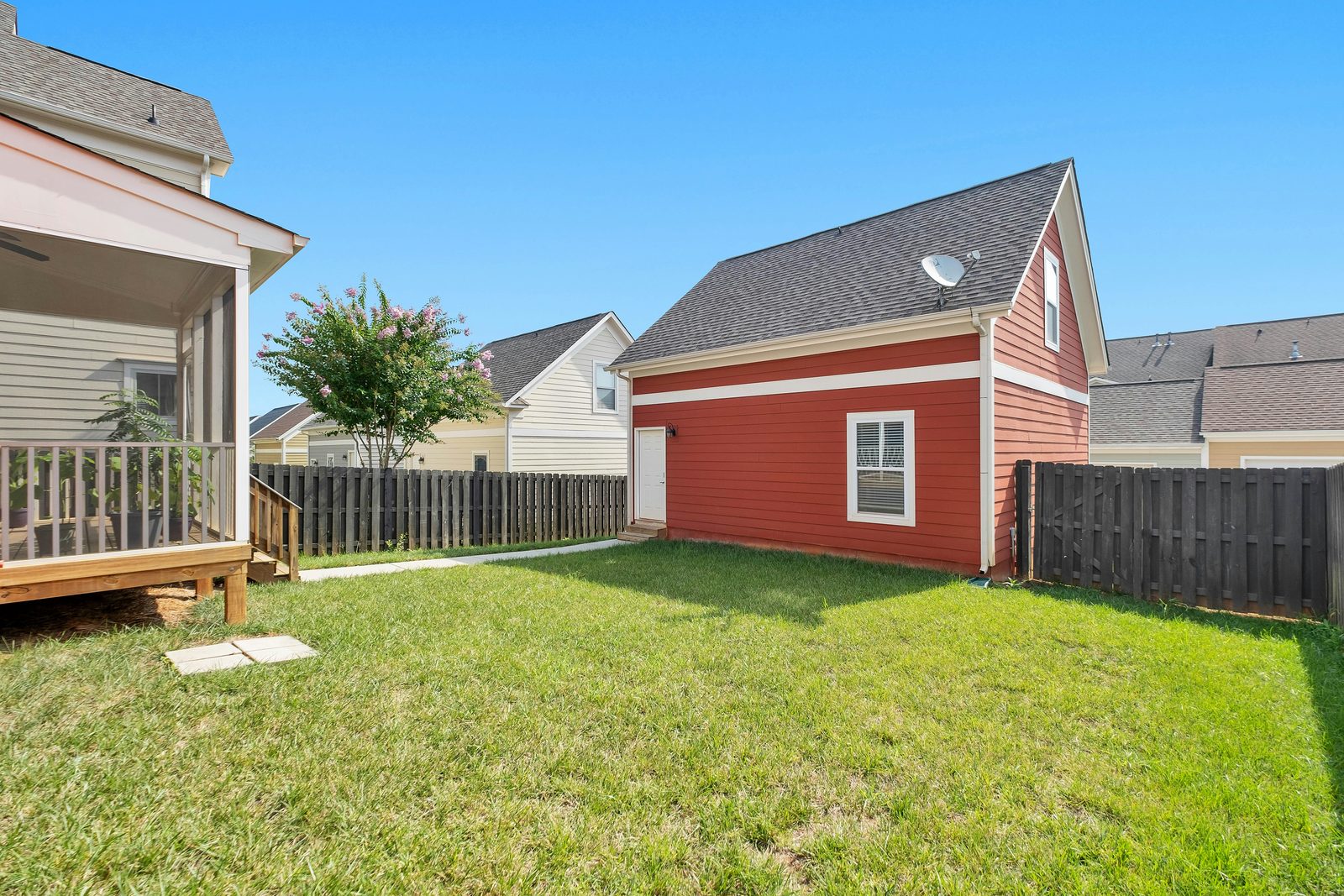
If you're weighing an ADU for what it'll add to your property, or sizing up a unit your home already has, run these checks:
1. Is the existing unit actually permitted, with a final sign-off in the city records? If you don't know, that's the first thing to find out.
2. If it's not permitted, does it qualify for the pre-2020 amnesty path, and what would legalization realistically cost?
3. Does your city allow separate sale, or does the value live in the combined property? Outside San Jose in the Bay Area, assume combined.
4. Is your builder's number a contracted price that holds, or a low bid that grows once you're committed?
5. Can you see the budget, the permits, and the change orders in real time, or do you have to call and hope?
A unit that passes all five is an asset. A unit that fails the first one is a liability wearing an asset's clothes. The difference is permits and a price that holds, and both are decided before construction starts, on the walk-through.
To see how the income side and the resale side pencil out, our ADU construction overview lays out the types, the costs, and where the value comes from. And if it's the permit path you're unsure about, the ADU permits breakdown walks through what your city will require to make the unit legal and countable.
A permitted ADU adds a legal, functional unit at resale, the kind that shows up at appraisal and rents on the open market. An unpermitted one adds a disclosure problem. The laws widened the path to the first one. Getting there still takes a builder who knows the permit route for your city and holds the price they contracted, so the value you were counting on is the value you actually get.
Or if you've got a unit you're not sure is legal, or a project you want priced straight, let's talk about your project. No deposit to start the conversation.
For ADU construction, accessory dwelling unit permitting, and residential remodeling across the Bay Area, visit https://mendezandsonsinc.com.
Mendez & Son's Construction
39647 Iolani Ct.
Fremont, CA 94538
(408) 849-7340
See project photos and reviews from our ADU contractor Bay Area team on Nextdoor.